
Bring hope to forgotten conflicts
31 March 2026
'I survived childbirth under gunfire': How Blessing's story is helping displaced mothers in Central Nigeria
Warning: References to graphic violence, maternal deaths, and the loss of babies.
Massacres in Central Nigeria have displaced thousands of pregnant women. Many end up in remote, unsafe environments, with almost no medical care to help them survive childbirth.
This is Blessing’s story.
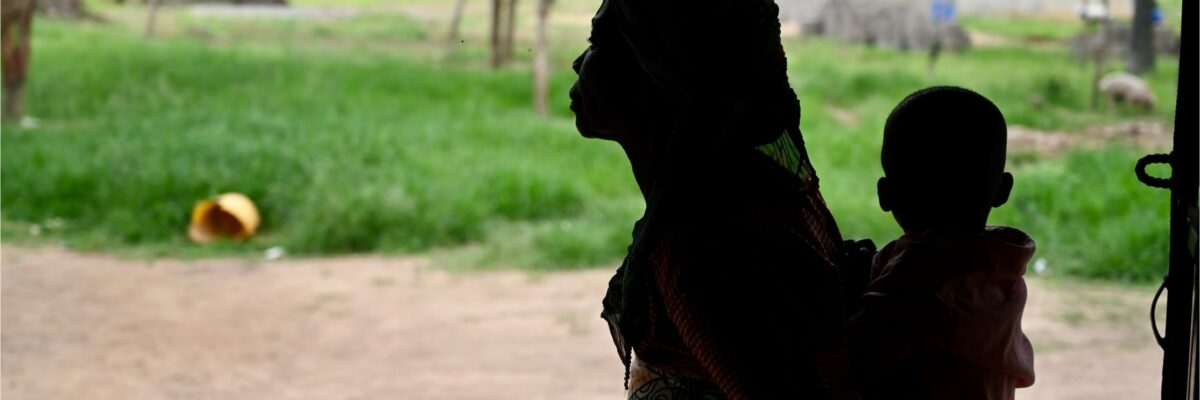
In April last year, Blessing was living in Plateau State, heavily pregnant with her second child. One morning, while her husband was away at work, a convoy of motorbikes carrying “hundreds of gunmen” approached her village.
The heavily armed men were members of Fulani militia, an extremist group responsible for repeated attacks and abductions across Central Nigeria.
When I heard gunfire, my waters broke. The shock forced my body into labour. I begged my baby not to come.
Blessing saw homes set ablaze as she fled with her mother-in-law and three-year-old son. “I remember feeling the bullets fly past my head”, she says.
Blessing and her family found temporary refuge in a neighbouring village, sheltered by an elderly Fulani man. “It was too dangerous to stay there”, she explains. “We realised his sons might have been involved in the violence”, a concern later confirmed by our local team.
They ran to a nearby church, where a lone Nigerian soldier was protecting victims of the attack. “I collapsed and lost consciousness”, Blessing recalls.
It was far more painful than the birth of my first child; I felt like my bones were breaking.
The labour progressed rapidly, heightening the risk of complications such as haemorrhage, birth injuries and pre-eclampsia, as well as shock and hypothermia for the baby.
Blessing’s mother-in-law did what she could to help while the soldier stood over them, returning fire against the Fulani militia. Against all odds, Blessing safely delivered a baby girl. She invited the soldier protecting them to name her daughter, who became the youngest survivor of the massacre. “We are lucky to be alive”, Blessing tells us.

PHOTO CAPTION: HART supporters have helped Blessing rebuild her life, start a business in a nearby city, and begin recovering from trauma.
Blessing’s story inspired our local team, Roads to Hope (R2H), to partner with BirthLink, an organisation supporting safer childbirth practices and newborn care in conflict zones.
They are providing expert training for Traditional Birth Attendants (TBAs) and addressing common practices that can endanger mothers and babies, such as applying ash or other herbal remedies (that may carry harmful bacteria) to the umbilical cord or to manage haemorrhages.
Mama Kits, which are equipped with sterile birth instruments and newborn essentials, are supplied to support this life-saving work.

PHOTO CAPTION: Most maternity wards across Plateau State do not have enough medical resources to ensure safe deliveries.
Pregnant women in Plateau State face many dangers, particularly those forced from their homes. With antenatal care out of reach, routine scans are often missed, and there is little or no support to help vulnerable or critically ill babies survive.
Miscarriages and stillbirths are rising, especially among mothers sheltering near rivers and open water, where malaria is prevalent. The mothers’ struggle to find food adds to the risk of complications during pregnancy and childbirth.
Clinics are often understaffed and poorly equipped, and in some cases, caesarean sections are performed without anaesthesia. We receive regular reports of mothers dying in labour or from infection in the days after giving birth.
On the final day of International Women’s Month, we celebrate mothers like Blessing and the remarkable women supporting them, including Kathy Mellor and our R2H team: Esther Yakubu, Lydia Yakubu and Sharon Hassan John.
Notes:
- The massacre, which affected Blessing and her family, claimed 52 lives, including children, and destroyed over 200 homes and farmland. The Nigerian Government has not held perpetrators accountable.
- The army has consistently failed to prevent or respond to violence on the Plateau, allowing armed groups to attack before disappearing across state lines.
- Citizen journalists report attacks on women, including expectant mothers, and graphic accounts of unborn babies “slashed from stomachs.”
- Nigeria records over 75,000 maternal deaths annually – more than a quarter of the global total – making it one of the most dangerous places for childbirth.
- Nigeria has the fourth highest neonatal mortality rate in the world, with thousands of newborns dying within their first month, often from preventable infections.
- Millions of women face barriers to life-saving medical care, especially in areas where violence has destroyed health infrastructure.
- Trauma-induced labour is a recognised phenomenon where external, physical trauma triggers immediate or premature labour, or necessitates urgent, forced delivery.